· today in space history · 6 min read
The Day a Car Started Its Journey to the Stars
Seven years ago, SpaceX revolutionized spaceflight by launching the most powerful operational rocket in the world, carrying with it a cherry-red Tesla Roadster that captured global imagination
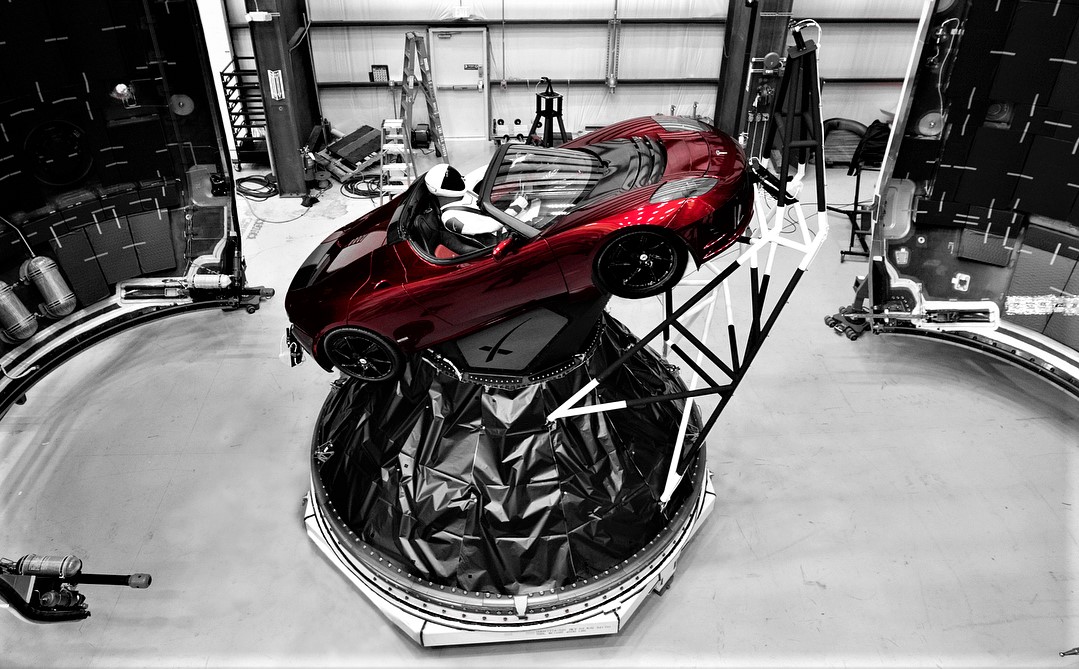
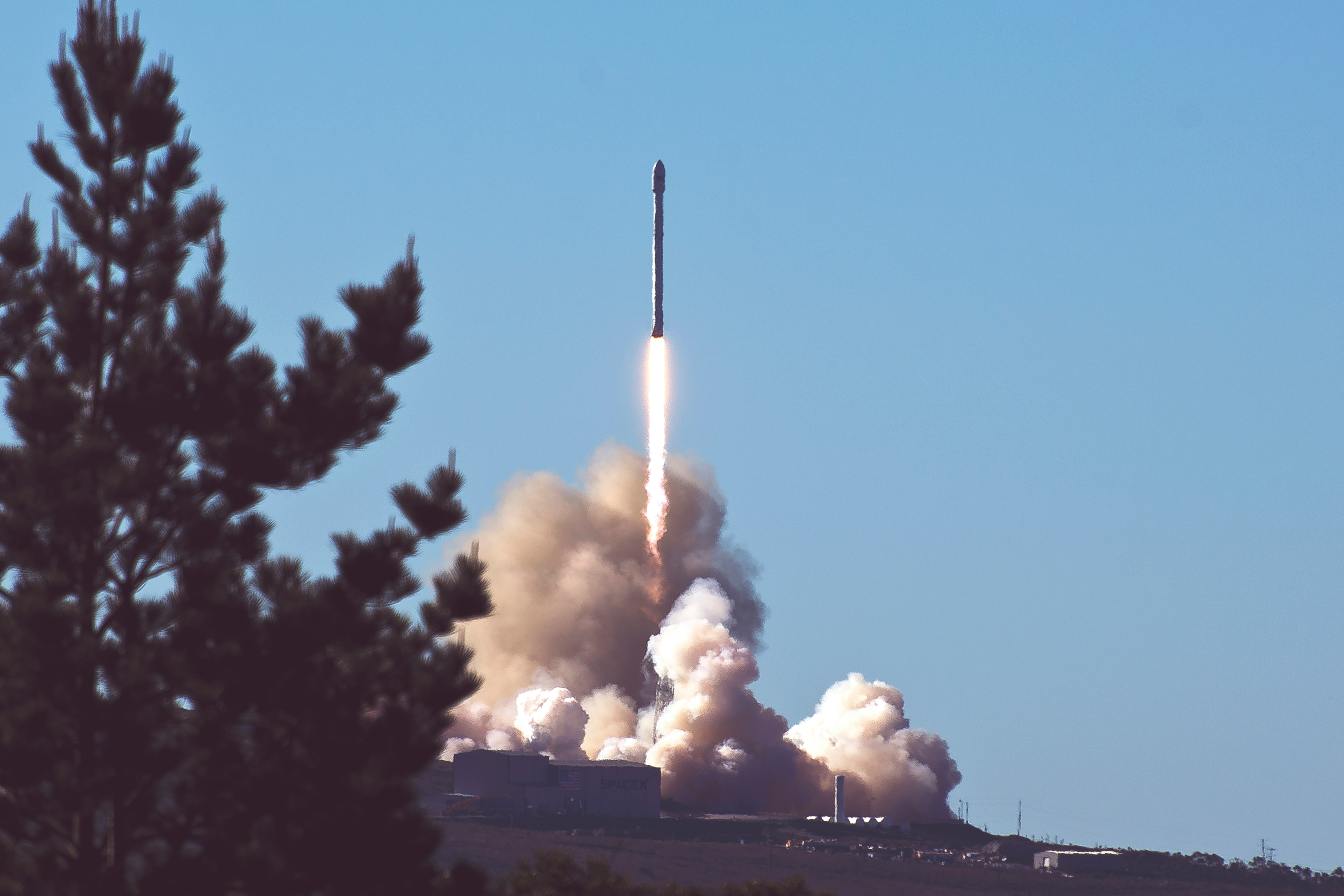
On a crystal-clear Florida afternoon, February 6, 2018, the ground at Kennedy Space Center’s Launch Complex 39A began to tremble. At 3:45 PM EST, twenty-seven engines roared to life simultaneously, unleashing five million pounds of thrust as SpaceX’s massive Falcon Heavy rocket lifted off on its maiden voyage. Atop this technological marvel sat what would become the most talked-about payload in spaceflight history: a cherry-red Tesla Roadster with a spacesuit-clad mannequin named “Starman” at the wheel, destined for a journey through the solar system.
A Dream Years in the Making
The path to this historic launch began nearly a decade earlier when SpaceX founder Elon Musk first proposed the concept of clustering three Falcon 9 rockets together to create a heavy-lift vehicle. Originally targeted for a 2013-2014 debut, the project faced numerous technical challenges that pushed the timeline back. The delays proved beneficial, allowing SpaceX to incorporate crucial improvements from their rapidly evolving Falcon 9 program.
“It’s been a long journey,” Musk admitted in a pre-launch press conference. “The amount of coordination and technology development required to make three cores work together as one rocket turned out to be much more difficult than we initially thought.”
Engineering Marvel Meets Marketing Genius
The Falcon Heavy represented a masterpiece of engineering pragmatism. By using three modified Falcon 9 first stages—each powered by nine Merlin 1D engines—SpaceX created the most powerful operational rocket in the world while minimizing new development costs. The center core was specially reinforced to handle the immense structural loads, while the side boosters were actually flight-proven Falcon 9 first stages that had already launched and landed on previous missions.
But it was the payload that captured global imagination. Instead of using a conventional mass simulator, Musk decided to launch his personal Tesla Roadster. “It seemed too boring to launch a block of concrete,” he explained. The car was equipped with cameras that would broadcast stunning views of Earth receding in the background, while a spacesuit-clad mannequin dubbed “Starman” sat casually in the driver’s seat. The dashboard display read “DON’T PANIC”—a reference to Douglas Adams’ “The Hitchhiker’s Guide to the Galaxy”—while David Bowie’s “Space Oddity” was set to play on the car’s sound system.
Launch Day Drama
The morning of February 6 dawned clear and cool at Kennedy Space Center. As countdown procedures progressed, tens of thousands of spectators gathered at viewing sites along Florida’s Space Coast. The successful static fire test two weeks earlier had demonstrated that all 27 engines could work together, but nothing short of actual flight would prove the complete system.
At 3:45 PM EST, the moment of truth arrived. The ground shook as all 27 Merlin engines ignited, pushing against their restraints. The rocket cleared the tower with surprising grace for such a massive vehicle, rising on a column of flame visible for miles around. “The sound was incredible,” recalled veteran space photographer Bill Ingalls. “You could feel the power in your chest—it was unlike anything since the Saturn V.”
A Performance Beyond Expectations
The flight itself proved more successful than even SpaceX had dared hope. At two minutes and thirty seconds into the flight, the two side boosters separated simultaneously from the center core—a critical moment that could have gone catastrophically wrong. Instead, it worked perfectly. The sight of the two boosters executing synchronized landings back at Cape Canaveral minutes later became instantly iconic, drawing cheers from crowds and control rooms alike.
The center core, attempting a more challenging landing on a drone ship in the Atlantic, wasn’t as fortunate. Only one of its three landing engines ignited for the final burn, causing it to impact the ocean at high speed. But by then, the primary mission was already a resounding success—the upper stage had successfully ignited and was carrying Starman and his Roadster toward an orbit that would take them beyond Mars.
Technical Achievement Meets Popular Culture
The mission’s technical achievements were impressive: Falcon Heavy could lift up to 64 metric tons to low Earth orbit—more than twice the capacity of any other operational rocket. The successful demonstration opened new possibilities for launching heavy satellites, deep space missions, and even crewed flights beyond Earth orbit.
But it was the cultural impact that truly set this launch apart. The sight of a red sports car floating in space, with Earth as a backdrop and a spacesuited figure at the wheel, captured public imagination in a way few space events had since the Apollo era. The live video feed was watched by millions worldwide, while images of the car in space became instant classics of the social media age.
Legacy and Impact
The inaugural Falcon Heavy launch marked several pivotal moments in spaceflight history. It demonstrated that private companies could develop super-heavy-lift rockets at a fraction of traditional costs. The successful recovery of two boosters proved that even the largest rockets could incorporate reusability. Perhaps most importantly, it showed that space exploration could still capture public imagination when presented in an engaging way.
The mission also established new benchmarks for launch economics. With a list price of $90 million, Falcon Heavy offered heavy-lift capability at roughly one-tenth the cost per kilogram of its nearest competitor. This dramatic cost reduction opened new possibilities for commercial space activities, from larger satellites to ambitious private space ventures.
Scientific Contribution
While many focused on the theatrical aspects of launching a car into space, the mission provided valuable scientific and engineering data. The extended coast phase of the upper stage demonstrated long-duration restart capability crucial for complex deep space missions. The trajectory of the Tesla Roadster became a useful data point for studying the long-term evolution of orbits in the inner solar system.
Astronomers continue to track Starman’s journey through space, providing opportunities to study the effects of solar radiation and micrometeoroid impacts on both the car and the spacesuit. These observations contribute to our understanding of how materials degrade in the space environment—valuable data for designing future deep space missions.
Looking Forward
Seven years after that spectacular debut, Falcon Heavy has established itself as a reliable heavy-lift vehicle, launching crucial national security payloads and ambitious scientific missions. The rocket’s success helped pave the way for NASA’s selection of SpaceX for key Artemis program missions, including the Human Landing System contract.
As we look toward an exciting future of lunar bases and Mars expeditions, the Falcon Heavy launch of 2018 stands as a turning point—the moment when private enterprise demonstrated it could match and exceed government space programs’ capabilities. More than that, it showed how technical achievement and cultural impact could combine to reignite public enthusiasm for space exploration.
Somewhere out there, Starman continues his endless journey through the solar system, a testament to human ingenuity and imagination. His car’s dashboard still displays its simple message: “DON’T PANIC”—words that seem particularly appropriate as humanity takes its next giant leaps into the final frontier.

Theodore Kruczek