· today in space history · 3 min read
The Day Columbia's Crew Shared Their Vision of Peace
Twenty-two years ago, the crew of Space Shuttle Columbia awakened to John Lennon's 'Imagine' and shared a profound message about unity and peace that would become part of their enduring legacy
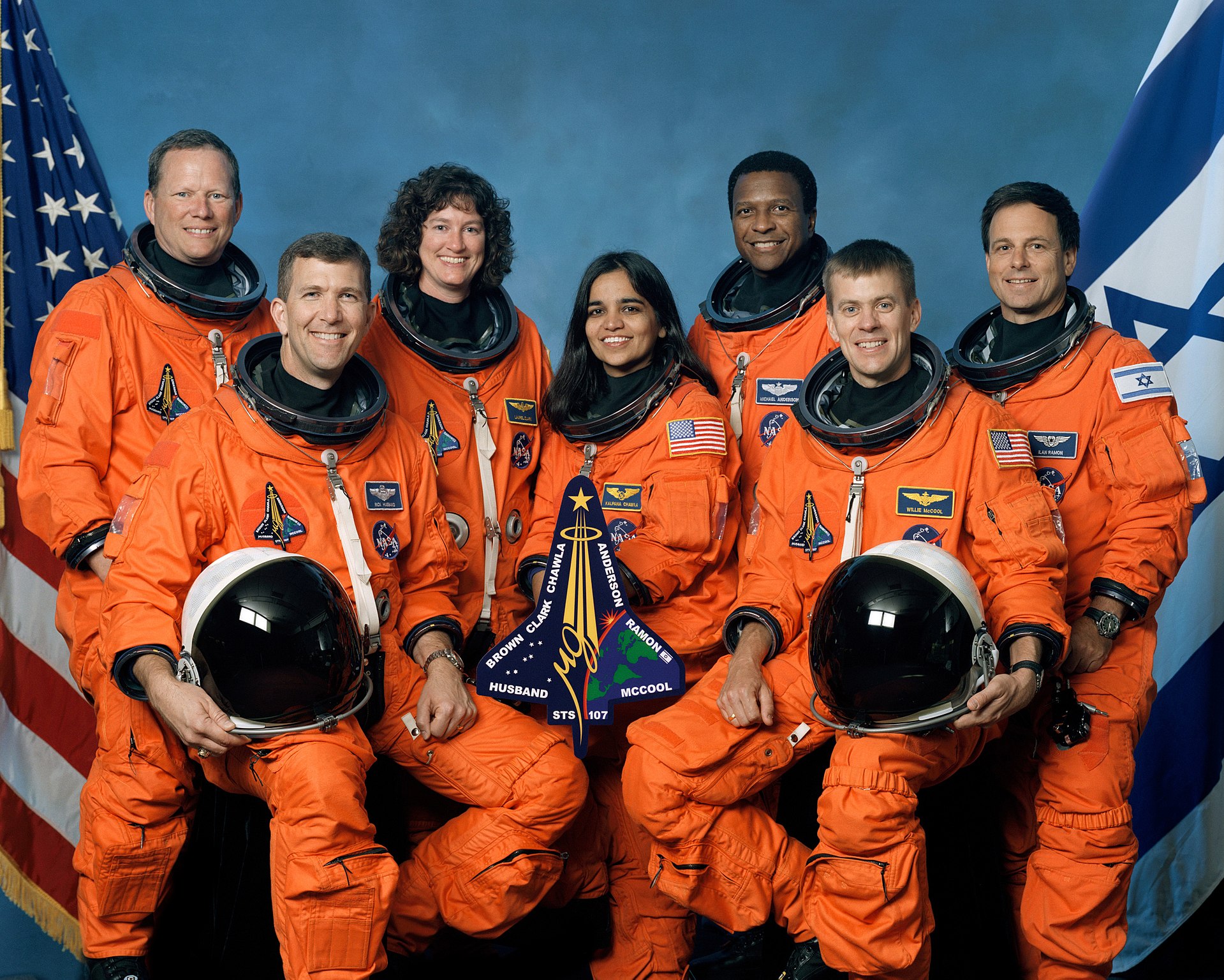
In the predawn hours of January 29, 2003, as Space Shuttle Columbia orbited high above Earth on its 16th day in space, the crew received one of their final wake-up calls. The chosen song was John Lennon’s “Imagine” – a melody whose message of peace and unity would take on profound significance in the days to come.
A View from Above
Responding to the musical selection, Pilot Willie McCool and Payload Specialist Ilan Ramon shared observations that would become part of their enduring legacy. Looking down at Earth from their unique vantage point, they noted how national borders disappeared from view, leaving only the stunning beauty of our shared planet below.
Speaking in both English and Hebrew, they expressed their hopes for world peace – a message that carried special weight coming from Ramon, Israel’s first astronaut, and resonated deeply with the mission’s international character.
A Multicultural Celebration
The wake-up call that morning was actually two-fold. For the Red Team, which included Mission Specialist Kalpana Chawla, the chosen song was “Yaar ko hamne ja ba ja dekha” by Abida Parveen. This musical selection celebrated Chawla’s Indian heritage and highlighted the diverse backgrounds of Columbia’s crew.
The Surviving Record
Among the most poignant aspects of this moment is that the video recording of the crew’s response to these wake-up calls survived the tragedy that would occur just days later. This precious footage preserves not just their words, but their genuine enthusiasm and the sincere hope they held for humanity’s future.
Legacy of Unity
The significance of this wake-up call has only grown with time. The crew’s message – about seeing Earth without borders and their hopes for peace – embodies the perspective shift that astronauts often describe when viewing our planet from space, a phenomenon known as the Overview Effect.
Today, as we face global challenges that know no borders, the Columbia crew’s words carry renewed relevance. Their observation that morning, about the artificial nature of national boundaries when viewed from space, continues to serve as a powerful reminder of our shared humanity and common destiny.
A Continuing Mission
While Columbia’s final mission ended in tragedy on February 1, 2003, the crew’s vision of unity and peace lives on. Their message that morning, delivered to the soundtrack of “Imagine,” remains a testament to how space exploration can change our perspective on what unites us rather than what divides us.
The wake-up call of January 29, 2003, stands as one of the most moving moments in spaceflight history – not just for what was said, but for how it encapsulated the hopes and dreams of a remarkable crew who gave their lives in the pursuit of knowledge that would benefit all humanity.
Every year on this date, space enthusiasts and historians revisit this recording, finding in it both inspiration and a bittersweet reminder of seven individuals who saw our world as it could be – without borders, united in the pursuit of knowledge and peace.
Their vision, expressed so eloquently that morning, continues to inspire new generations of astronauts and space explorers who carry forward the dream of using space exploration to bring humanity closer together.

Theodore Kruczek